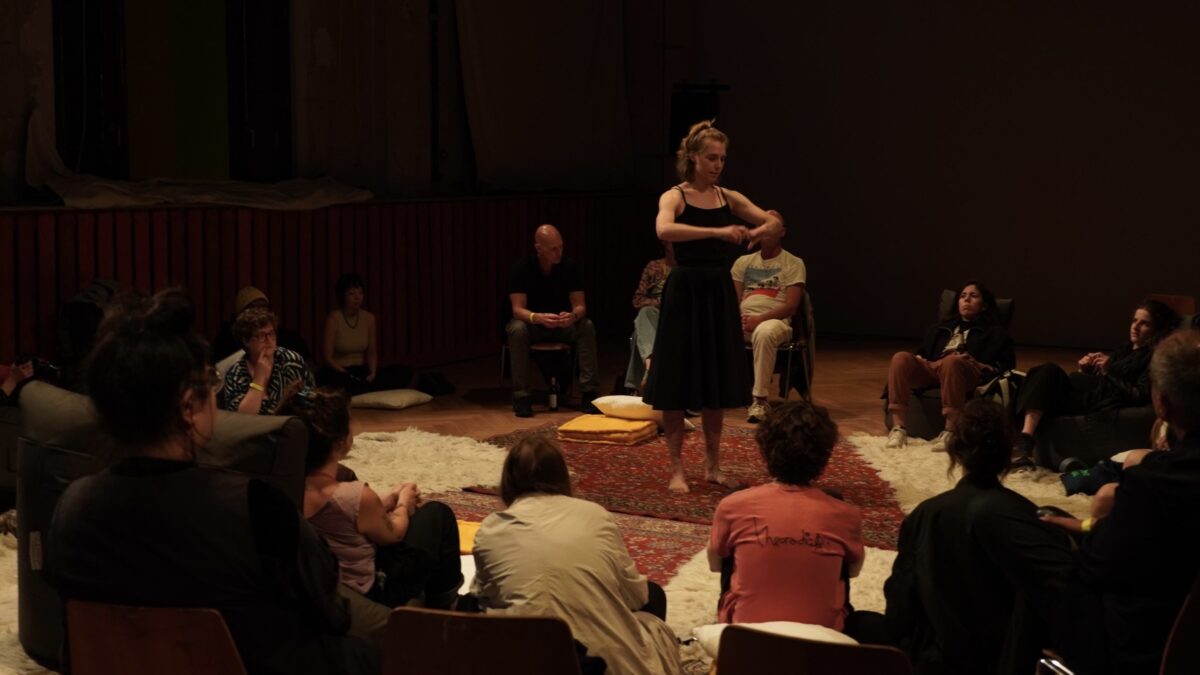
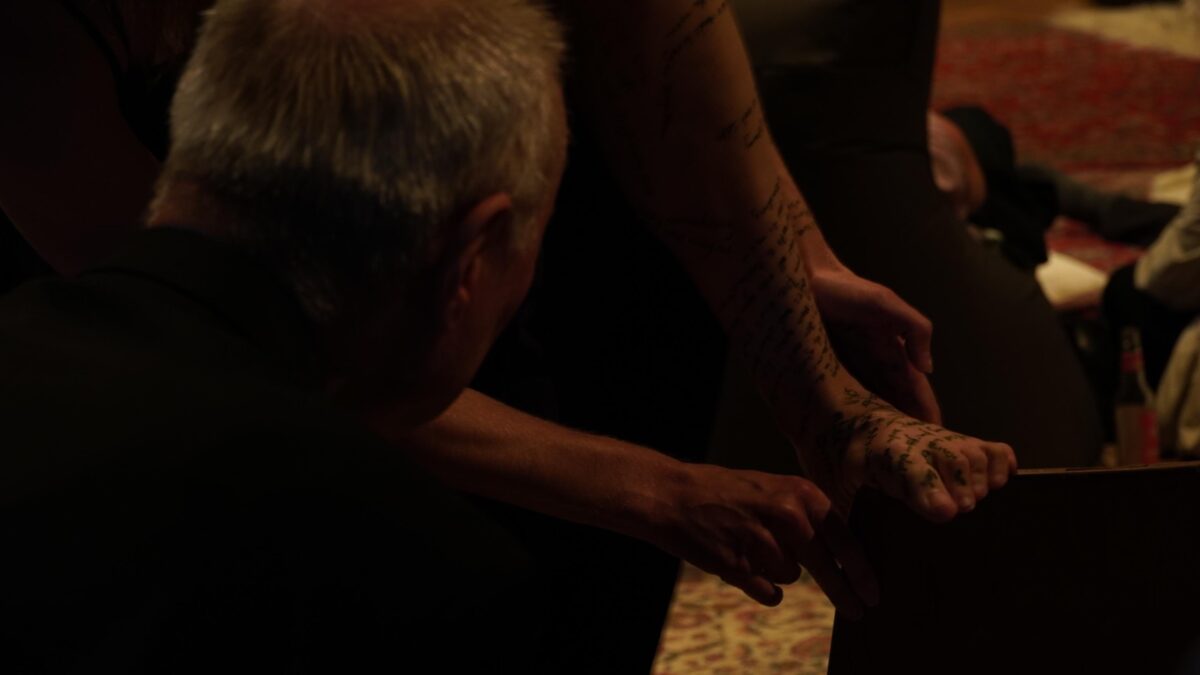
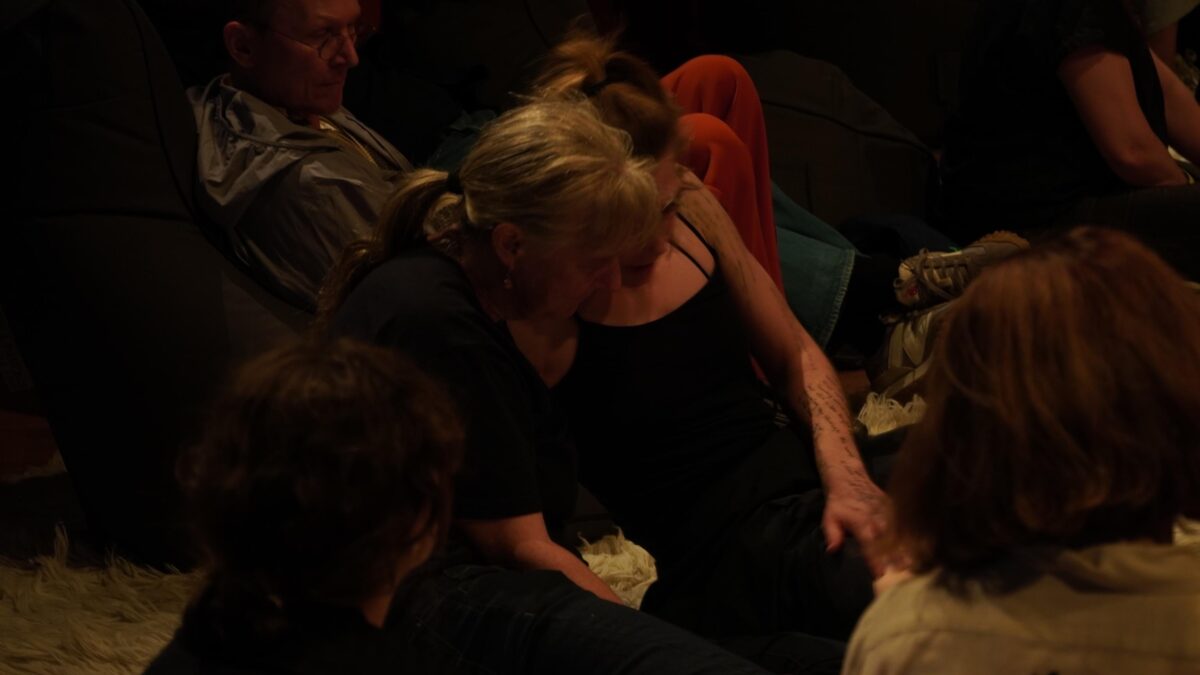
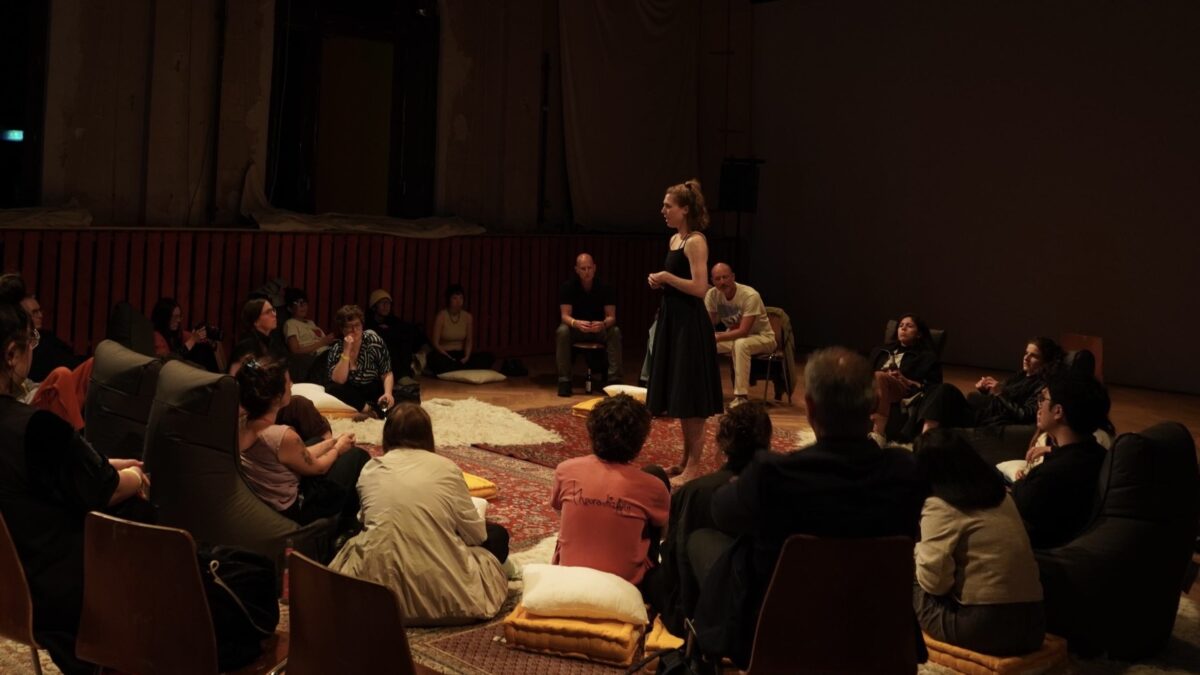
“Anamnesis” is the first performance in which I bring together both my identities – artist and psychotherapist. It is a work shaped by memory, loss, and the sharing act of asking. In the performance, two elements unfold in parallel: a prerecorded track plays my own voice, calmly posing questions pulled from the biographical questionnaire I use with therapy patients – those first steps into someone’s history. Between each question, there is silence in which I move through the audience. One by one, I approach and whisper fragments of poetry from Carolyn Gammon’s “On Her Own Terms” – her vibrant record of the final years of her mother’s life with dementia. I don’t read these lines from a page, but from my own skin: verses scrawled across my body, handwritten reminders of what it means to remember – and what it means to forget.
“Anamnesis” is the official term used when a doctor or therapist asks a patient question on their history. I wonder how many caregivers or caretakers actually know its origins: The term “anamnesis” goes back to Plato, who believed that people have forgotten the knowledge of their previous life, and by a method of question-asking, could slowly retrieve it. He believed that this was genuine knowledge (episteme or noēsis).

Comments are closed.